Your cart is currently empty!
Tag: 2 core flat cable
-

Complete Guide to Uses and Specifications of 2.5mm Twin & Earth Cable
Introduction
The twin & earth cable is regarded as one of the most important parts of any modern electrical system.
Owing to its resilience and effectiveness, it finds extensive usage in residential and business settings.
We will examine the features and specifications of the 2.5mm twin and earth cable in this lengthy article, giving you all the knowledge you want to comprehend their importance and applications.
What is twin & earth cable?
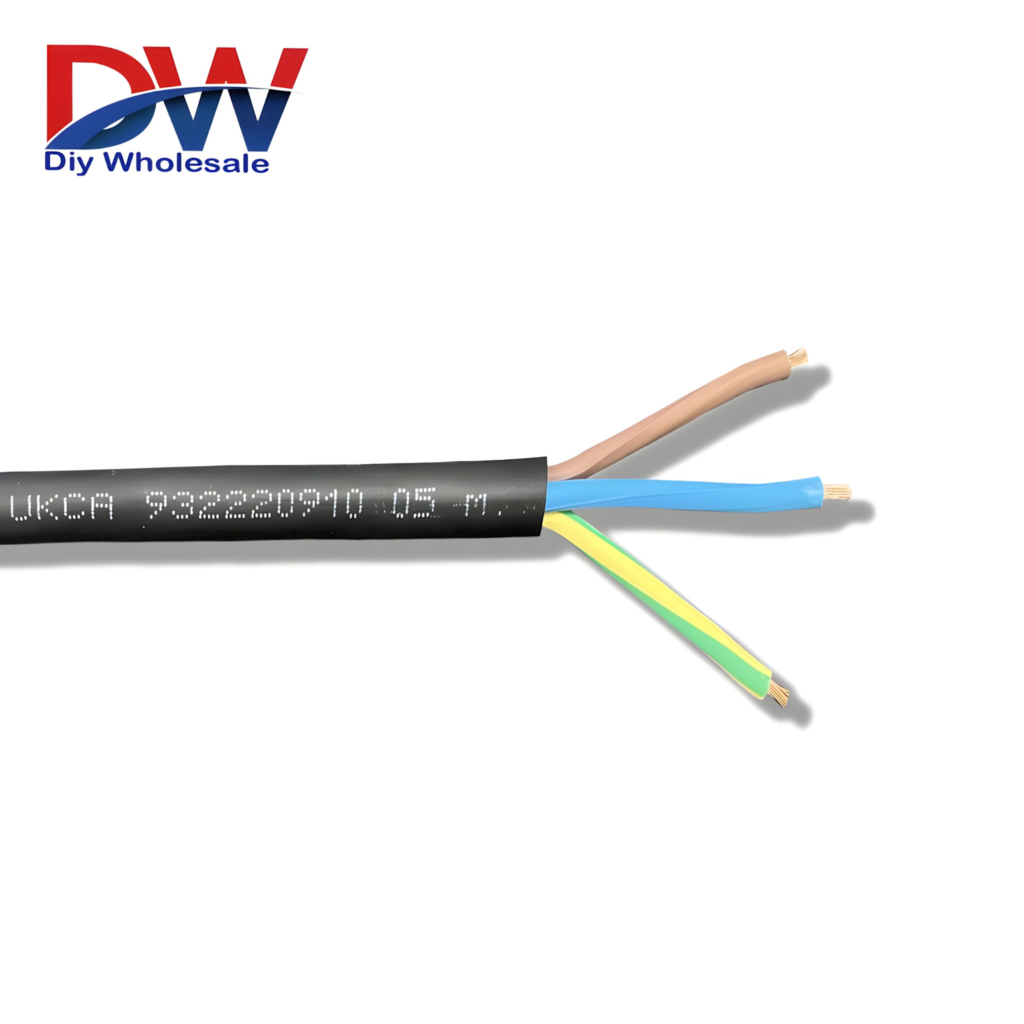
Twin & earth cable, abbreviated as T&E, is made up of two insulated current-carrying conductors and one bare earth conductor. The conductors are commonly constructed of copper, which has great conductivity and longevity.
The exterior sheath is often constructed of PVC, which provides strong protection from physical damage and environmental elements.
Specifications for 2.5mm twin and earth cables
When selecting the suitable 2.5mm twin & earth cable for your electrical projects, it is critical to grasp the characteristics. The primary characteristics are as follows:
- Conductor Size: The cross-sectional area of the conductors is 2.5mm. For low-power circuits such as socket outlets and lighting circuits, this size will be the perfect choice.
- Current Rating: The 2.5mm twin & earth cable typically has a current rating of 20-25 amps, making it suitable for a variety of household and commercial uses.
- Protection and insulation: PVC, which is renowned for having excellent electrical insulation qualities, is used to insulate the conductors. Further protection is provided by the outer sheath
- Temperature Rating: Under normal operating conditions, the cable can withstand temperatures of up 70 C, ensuring both performance and safety.
Common applications for 2.5mm twin & earth cable
Because of its durability and versatility, 2.5mm twin & earth cable is widely used in a range of electrical applications. The following are some typical uses:
1. Domestic wiring: This sort of wiring is commonly used in houses to link lighting circuits and outlets
2. Commercial Installations: When moderate power is required, it is used for power distribution and lighting in commercial buildings
3. Extensions and Renovations: Offers a solution for extending existing circuits or upgrading electrical systems.
4. Temporary Installations: This material’s durability and simplicity of installation make it perfect for temporary locations like events or construction sites.
Benefits of Using 2.5mm twin & earth cable
Selecting 2.5mm twin and ground cable offers several benefits.
• Ease of Installation: The cable is easy to handle and install, reducing labor time, thanks to its protective wrapping and flexibility.
• Safety: By acting as a conduit for currents and reducing the risk of electrical shock, the twin & earth cable conductor improves safety.
• Durability: The PVC sheath and insulation protect the conductors from environmental factors and physical harm, ensuring long-term reliability.
• Cost-Effectiveness: It strikes a balance between performance and pricing by offering an affordable solution for a variety of wiring needs.
Installation Requirements for Earth and Twin 2.5 mm Cables
To guarantee performance and safety, 2.5mm twin and earth cable installation must be done correctly. Here are some crucial things to remember:
- Regulation Compliance: Make that the installation conforms to regional electrical codes and standards, such as the UK’s IET Wiring Regulations (BS 7671).
- Routing: Arrange the cables in a way that minimizes their exposure to environmental dangers and prevents physical damage.
- Connection: To preserve the integrity of the connections and avoid errors, use the proper junction boxes and connectors.
When further protection against environmental elements or mechanical damage is required, such as conduit or trucks, it should be provided.
- Testing: To guarantee safety and operation, check the circuits for continuity, insulation resistance, and earth fault loop impedance after installation.
Upkeep and Problem-Solving
For long-term dependability and safety, 2.5mm twin & earth cable systems must be maintained and troubleshooted. Here are some points:
- Frequent Inspections: Look for any indications of deterioration, wear, or damage by conducting routine inspections.
- Testing: Conduct routine tests on the electrical system to make sure it complies with safety regulations and runs properly.
- Repairs: To avoid electrical malfunctions and risks, promptly take care of any problems, such as broken insulation or loose connections.
- Documentation: To monitor the state of the electrical system, keep thorough records of all testing, inspections, and repairs.
Conclusion
2.5mm twin & earth cable is a vital component in electrical systems, providing adaptability, safety, and longevity. Understanding its characteristics, applications, and installation concerns is critical to achieving peak performance and safety. Regular maintenance and consideration of environmental conditions add to its benefits, making it a dependable solution for a wide range of applications
-

Learn the differences between black rubber cables & TPE cables | Comprehensive Guide
Introduction
For electrical and electronic cabling to function reliably, efficiently, and for a long time, it is very important to choose the right cable type. TPE cable and black rubber cable are the most frequently contested options.
When choosing a cable for a particular application, it is important to know the differences between these two types of cables.
What is the black rubber cable?
Rubber cable that is black in color is renowned for being durable and flexible. This cable, which is often made of rubber known as ethylene propylene diene monomer (EPDM), is ideal for both indoor and outdoor applications because to its exceptional resistance to high heat and cold.

Crucial features for the black rubber cable:
1. High flexibility: Because black rubber cable is very flexible, they work well in dynamic situations where there is a lot of movement.
2. Superb Insulation: These cables ofters strong insulation that guards against electrical malfunctions and gurantees user security.
3. Temperature resistance: They are appropriate for both hot and cold locations due to its ability to tolerate a broad range of temperature
4. Waterproof: This cable is strong in outdoor environments since the rubber composition is impervious to water, oil, and other abrasive substances.
5. Durability: This type of cables is well known for its long lifespan and high resistance to wear and tear
What’s happening with the TPE cables?

These cables are made from a combination of polymers with both thermoplastic and elastomeric qualities, called thermoplastic elastomer, or TPE. TPE cables are a great option for a variety of applications because they provide a great balance of flexibility, hardness, and weather resistance.
Important feauters of TPE Cables:
1. Increased flexibility: This type of cables is well known for its perfect flexibility
2. Chemical Resistance: It can be used in the industrial setting because of their strong resistance to a wide range of chemicals, oils and solvents as well.
3. Temperature Tolerance: These cables have a wider temperature tolerance than black rubber cables
4. Lightweight: This type compared to the black rubber cable is characterized by its lightweight.
5. Eco- Friendly: TPE materials might be useful for projects that care about the environment because they are frequently recycable.
A Comparative guide between the TPE cable and the black rubber cable
- Both adaptability and durability
TPE cables and black rubber cables are equally flexible and long-lasting, yet they serve distinct purposes. Because of its somewhat higher physical robustness, black rubber cables are perfect for heavy-duty applications. TPE cables, on the other hand, have greater flexibility, which is essential for applications that need to move and bend a lot.
- High tolerance to the temperature
When it comes to the high tolerance to temperature, the TPE cable will be your perfect choice.
Because of this, TPE cables are better suited for harsh settings with large temperature variations.
- Chemicals and weather resistenace
Due to its strong resistance to chemicals and weather, the black rubber cable is the dependable option for indoor and outdoor applications.
TPE cables, on the other hand, have increased chemical resistance, which makes them perfect for settings where different oils and solvents are present.
- Lightweight
Mainly, the TPE cables are frequently lighter than the black rubber cable in areas where light weight is important.
This is true for electronics in cars, airplanes, and portable devices where weight reduction is essential.
- Impact on the environment
when it comes to the environment, the TPE cables are well-known for being recycable which are frequently more environmentally beneficial.
Selecting the Correct Choice
Think about your application’s specific requirements while deciding between the TPE and black rubber cables.
If your project requires the highest level of weather resistance and endurance, black rubber cables can be your best choice. If flexibility, low weight, and chemical resistance are more significant considerations, TPE cables could be a better option.
Conclusion
Different applications needs different benefits whether from the TPE cables or from the black rubber cable.
You may choose a cabling solution that will provide maximum performance and lifespan by being aware of the main distinctions and particular advantages between each.
Looking for more help?
you can contact DIY wholesale!